Testosterone in practice: esters compared, TRT versus supraphysiological dosing, and why it’s the base of every serious cycle
Testosterone is the reference compound in this entire section. Every other injectable steroid — nandrolone, trenbolone, drostanolone, boldenone — is a modified testosterone molecule, and every dosage number, ratio and side-effect table anywhere in the anabolic literature uses testosterone as the anchor point. That’s not marketing. It’s structural.
What follows is a practical breakdown of the testosterone forms in this sub-category, how to think about the choice between them, and what changes when the dose crosses from replacement (TRT) into supraphysiological (cycle) territory.
The molecule and the ester question
The testosterone molecule itself has a plasma half-life measured in minutes when injected uncoupled — useless for anything except a lab experiment. To make it work as a therapy or a cycle base, chemists attach a fatty-acid ester to the 17β-hydroxyl group. The ester makes the molecule lipophilic enough to sit in an oily depot inside the muscle, and it converts the compound into a slow-release format that lasts days or weeks.
The choice of ester decides the release speed. The active molecule that reaches the androgen receptor after enzymatic cleavage is exactly the same in every case — plain testosterone. What differs is only how fast it comes out of the depot.
The ester family, side by side
| Ester |
C-count |
Half-life |
Typical frequency |
Trade-off |
| Propionate |
3 |
~0.8 days |
Every 1–2 days |
Fast control, high PIP, frequent injections |
| Phenylpropionate |
9 |
~4–5 days |
Every 2–3 days |
Middle ground; less PIP than propionate |
| Enanthate |
7 |
~4–7 days |
1–2× per week |
The workhorse; smooth, cheap, everywhere |
| Cypionate |
8 |
~8–12 days |
1× per week |
US-standard TRT ester; long, smooth |
| Undecanoate (Nebido) |
11 |
~12 weeks |
Every 10–14 weeks |
Ultra-long TRT-only ester; not used in cycles |
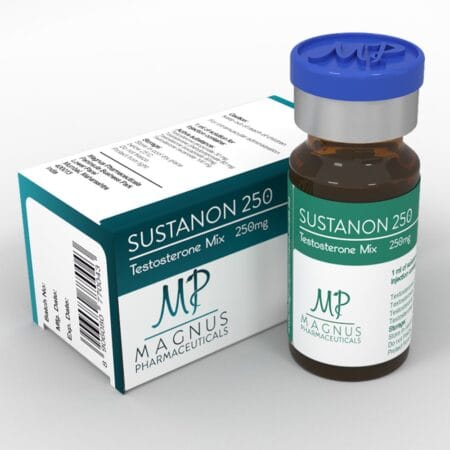
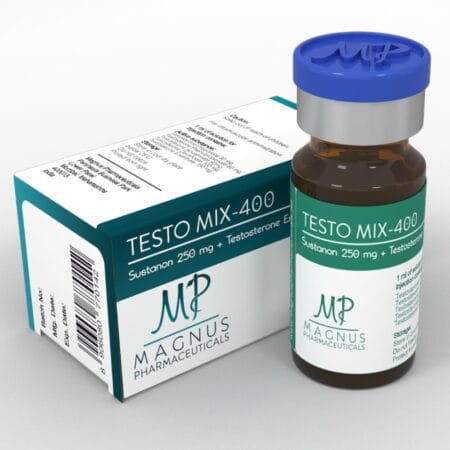
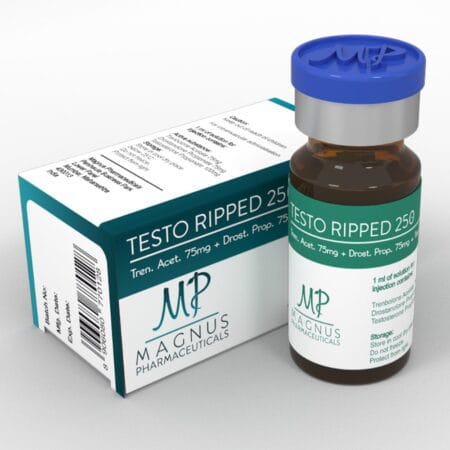
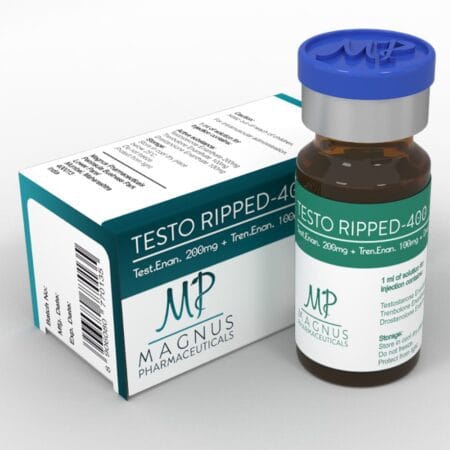
Sustanon 250 and the Testo Mix 400 blends combine multiple esters (propionate, phenylpropionate, isocaproate, decanoate, sometimes enanthate) in a single vial. The marketing pitch is a smooth continuous release; the pharmacokinetic reality is that hitting a truly flat blood level with a multi-ester product requires injecting every 3–4 days, not once a week.
Picking the right ester for the job
The choice sits on three axes: how often you’re willing to inject, how fast you need to be able to adjust the dose, and how tolerant your injection sites are to the local irritation.
Propionate — pick this if fast adjustment matters (aggressive contest prep, first-time users testing tolerance) or if you need a short washout before PCT. Downsides: every-other-day injections, and PIP that can shut down leg training for the first two weeks.
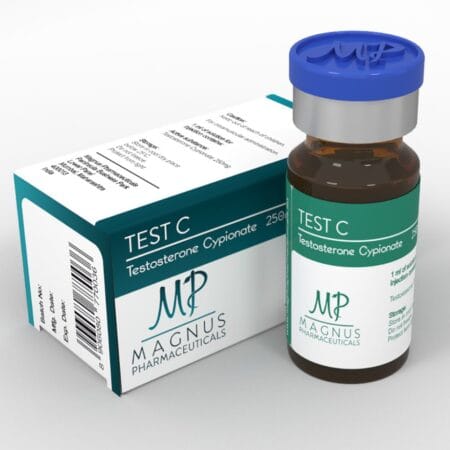
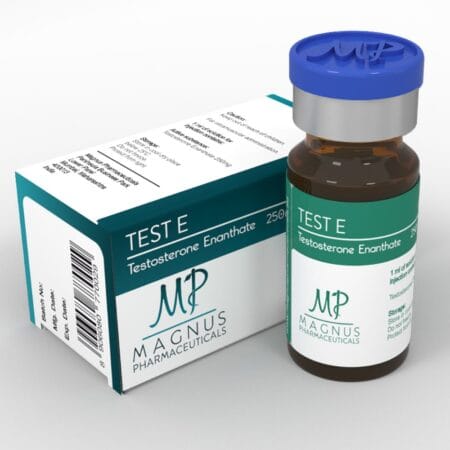
Enanthate or cypionate — the default for essentially any first cycle and for most experienced-user cycles. Once-weekly (cypionate) or twice-weekly (enanthate) works, smooth serum profile after 3–4 weeks of loading, minimal PIP, cheap and universally available.
Phenylpropionate (TPP) — a niche middle ground. Less PIP than propionate, faster fine-tuning than enanthate. Not a first-cycle compound because supply is patchier and quality control on grey-market TPP is inconsistent.
Undecanoate — TRT context only, not for cycles. The 12-week half-life means dose adjustments take months to show up.
Sustanon or Testo Mix 400 — reasonable if you’re comfortable injecting every 3–4 days. Frustrating if you’re not.
TRT versus supraphysiological doses
The physiological difference between testosterone replacement therapy (TRT) and a supraphysiological cycle is dose. TRT aims to restore serum testosterone to roughly the middle of the physiological range for a healthy young adult: 500–900 ng/dl total testosterone, with sensitive estradiol in the 20–40 pg/ml range. Weekly dose is typically 100–200 mg testosterone enanthate or cypionate.
Supraphysiological cycles run 300–1000 mg/week or higher, producing serum testosterone in the 1500–4000+ ng/dl range. The side-effect profile changes with dose: at TRT levels, most users see minor cosmetic changes and stable long-term markers. At supraphysiological levels, hematocrit rises (phlebotomy at > 52%), estradiol climbs (management with an AI or diet), lipid profile drifts (HDL down 20–40%), and endogenous testosterone production drops to essentially zero for the cycle duration.
Neither dose range is “safe” in an absolute sense. TRT is medically supervised and adjusted to bloods; cycle doses are usually neither. The single biggest predictor of a good long-term outcome is whether the user actually gets bloods done and adjusts based on them.
Common side effects across all forms
Because the active molecule is the same (plain testosterone) across every ester, the side-effect profile lines up regardless of which vial the compound arrives in:
- Water retention (estradiol-driven), sometimes visible in the face
- Acne on the face and upper back, dose-dependent
- Blood pressure creeping up (systolic +5 to +15 mmHg average at cycle doses)
- Rising hematocrit — phlebotomy line at 52–54%
- Hair loss where genetically predisposed
- Prostate enlargement with a rising PSA (relevant from age 30+)
- Gynecomastia through aromatisation (managed with an AI or a SERM)
- Full suppression of endogenous testosterone production on cycle
PCT and HCG timing
The exit strategy from any testosterone cycle depends on the longest ester in play. Practical PCT start:
- Propionate — 3–4 days after the last shot
- Phenylpropionate — 7 days
- Enanthate — 14–18 days
- Cypionate — 18–21 days
- Multi-ester blends (Sustanon, Testo Mix 400) — 3 weeks (the decanoate sets the clock)
Standard PCT: SERM across 4–6 weeks. Tamoxifen 20 mg daily or clomiphene 25 mg daily, sometimes both in reduced doses. HCG in the last 2–3 weeks of the cycle at 500–1000 IU every 3 days primes the testes for the restart — worth adding for cycles over 10 weeks or for users on their third-plus cycle where axis recovery is getting slower.
Legal picture
Testosterone is a Schedule III controlled substance under US federal law and a Class C drug in the UK. Prescription-only across all EU member states. TRT is a legitimate medical indication; supraphysiological cycles are outside the licensed use of any testosterone product on the market. Purchase without a prescription is illegal in all three jurisdictions; personal-use possession usually sits at the misdemeanour level, distribution at the felony level.
WADA Prohibited List, category S1.1 (Anabolic Agents), banned at all times. Detection through LC-MS/MS with IRMS backup (isotope-ratio mass spectrometry) when an endogenous-origin explanation has to be ruled out. All esters are automatically covered by the ban.
What we carry in the Testosterone section
Sub-categories under this hub include Testosterone Enanthate, Testosterone Cypionate, Testosterone Propionate, Testosterone Phenylpropionate, Testosterone Suspension, Undecanoate, Sustanon and blend products like Testo Mix. Individual product pages carry the specific ester’s half-life, dose windows and injection frequency, plus the PCT timing for that particular ester. Brands stocked in the section include Magnus, Prime, Pharmacom, Genetic Labs and Spectrum Pharma via the USA-domestic supply route.