Peptides work through receptor systems different from the androgen receptor — GH secretagogues via GHRH or ghrelin receptors, GLP-1 agonists via incretin receptors, healing peptides via actin regulation or angiogenesis. That means the effect profiles rarely resemble steroids: no aromatisation, no HPG suppression from the peptide itself, and the endpoints are recovery, sleep, fat loss, immunity — not straight muscle mass building.
Which peptide is safest to start with?
Depends on the goal. For recovery and sleep support, Ipamorelin has the cleanest safety profile in its category. For immune support at any age, Thymosin Alpha-1 has the strongest evidence base and isn’t on the WADA list. For tendon and connective-tissue issues, BPC-157 is the community default despite the limited human data.
Do I need to run peptides in cycles like steroids?
Not always in the same way. GH secretagogues and BPC-157/TB-500 are typically run 6–12 weeks on, at least an equal break off. Thymosin Alpha-1 follows a 8–12 week seasonal pattern. GLP-1 agonists are looking more like long-term therapy than short cycles — a growing part of the clinical use pattern is continuous dosing at a maintenance level.
How do I actually verify a peptide batch is real?
The reliable route is third-party lab analysis: Enhanced Athlete Lab, Janoshik and comparable testing houses run HPLC purity assays on user-submitted samples. Optical checks (clear solution, no cloudiness after reconstitution) are necessary but not sufficient. HCG can additionally be checked qualitatively with a pregnancy test strip, but not quantitatively.
Can I stack multiple peptides at once?
Yes and it’s common practice — CJC-1295 DAC plus Ipamorelin, BPC-157 plus TB-500, GH secretagogues plus GLP-1 agonists in cutting phases. Separate injections are preferable for sterility; the pharmacokinetic interactions in most stacks haven’t been formally studied. Stay conservative on doses when adding a new peptide to an existing stack.
What is the price of Peptides at the steroid shop LabGain?
Steroid shop LabGain offers a wide selection of Peptides in stock.
Buy Peptides at prices ranging from 0 EUR to 170 EUR.
What other steroids for bodybuilding besides Peptides are available for sale?
We offer a great selection of Oral and Injectable steroids, PCT, Fat burners, HGH and SARMs. We're sure that you find the best solution for your needs.
Peptides in practice: what the category actually covers, the main sub-families and where the pitfalls sit
“Peptides” as a shop category is a big tent. It sits over a set of substances that share one structural feature — chains of amino acids shorter than a full protein — and share almost nothing else at the level of what they actually do in the body. A GH secretagogue like Ipamorelin has essentially nothing in common with a tanning peptide like Melanotan 2, other than both being molecules the body doesn’t easily degrade to a useless fragment.
What follows is a walk through the sub-families that make up the peptide catalogue, with the practical points that repeatedly bite users who treat the category as if all peptides were interchangeable.
The main sub-families in the catalogue
Growth hormone secretagogues
The biggest single group by usage. These peptides don’t replace growth hormone — they stimulate the pituitary to release its own. Two receptor systems dominate:
GHRH analogues (Sermorelin, CJC-1295 with or without DAC, Mod GRF 1-29) — bind the GHRH receptor, mimic the natural growth-hormone-releasing hormone. DAC modification adds days to the half-life.
Ghrelin-receptor agonists (GHRPs) (Ipamorelin, GHRP-2, GHRP-6, hexarelin) — bind the same receptor as the endogenous hunger and GH signal, ghrelin. Different profiles for cortisol and prolactin side effects; Ipamorelin is the cleanest of the bunch.
Combined in a stack (typically CJC-1295 DAC once weekly plus Ipamorelin nightly), the two receptor paths reinforce each other: baseline GH lifted plus a pulsatile peak at each shot. That’s the “peptide GH” logic in a nutshell.
Healing and tissue-repair peptides
The category most surrounded by community hype and case reports. Two names dominate:
BPC-157 — a 15-amino-acid fragment traced back to human gastric juice. Angiogenesis and collagen synthesis in animal models are its published talking points. Mostly discussed for tendon, ligament and GI-mucosa recovery.
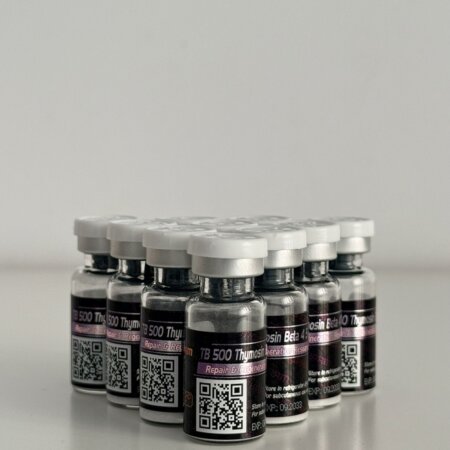
TB-500 — a synthetic fragment of Thymosin Beta-4, active on actin regulation and cell migration. Systemic effect (works far from the injection site), which is why it’s often stacked with BPC-157 in the so-called “Wolverine” combination.
Neither has controlled human clinical trials in the healthy-athlete population. Both sit in FDA Category 2 of the compounding bulk list — highest risk class — and on WADA’s Prohibited List in the S0 (non-approved) bucket for tested athletes.
GLP-1 and related incretin agonists
The category with the strongest clinical evidence base. Originally developed for type-2 diabetes and obesity, these peptides have moved into fitness cutting phases at speed:
Semaglutide — the reference GLP-1 agonist. Roughly 14% average weight loss in trials.
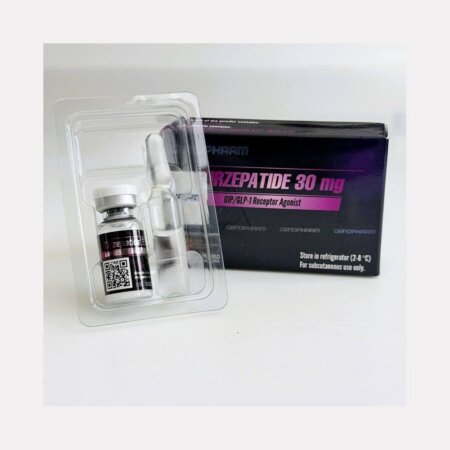
Tirzepatide — dual agonist at GIP and GLP-1. Trial average around 17–20%.
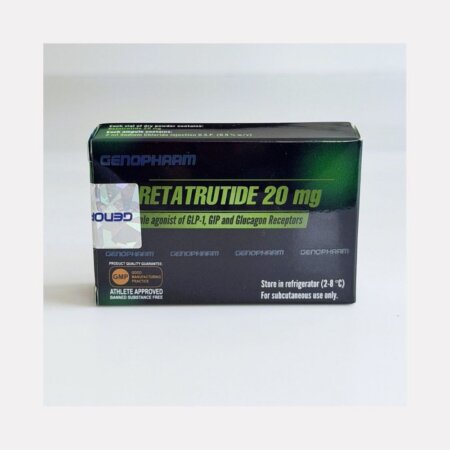
Retatrutide — triple agonist at GIP, GLP-1 and glucagon. Trial average around 24–30% — approaching bariatric-surgery territory. Still in phase-3; not yet approved.
All three work through appetite suppression, slower gastric emptying and (for the multi-agonists) direct effects on fat metabolism. Common trade-offs: nausea and other GI symptoms during titration, and a meaningful share of lean-mass loss if resistance training and protein intake aren’t dialed in.
Immunomodulators
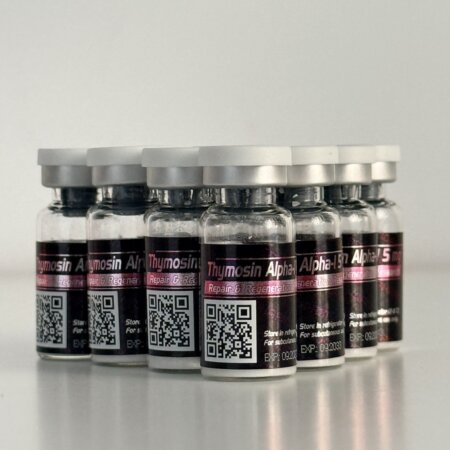
Thymosin Alpha-1 sits in a class of its own here. Unlike most peptides in the catalogue, it has a real medicine license in more than 35 countries (as Zadaxin), an evidence base of over 45 human trials in hepatitis and immunodeficiency, and — unusually — isn’t on the WADA Prohibited List. That last point makes it one of the very few peptides a tested athlete can consider.
Cosmetic / tanning peptides
Melanotan 2 is the main name. Non-selective agonist across the melanocortin receptors, which is why it produces so many effects beyond tanning: nausea, flush, spontaneous erections, appetite suppression, darkening of existing moles. The tanning only works with parallel UV exposure. Known safety issues include priapism cases requiring emergency treatment and case reports of melanomas in long-term users. Not a peptide to start casually.
What actually matters at the level of a single vial
Reconstitution and dosing accuracy
Almost every peptide in the catalogue ships as lyophilised powder that has to be reconstituted with bacteriostatic water before use. The dilution you choose shapes the dosing accuracy for the rest of the vial’s life. A 5 mg vial diluted with 5 ml gives you 1 mg/ml — every 0.1 ml equals 100 µg. Cleaner arithmetic, less risk of a decimal slip on the syringe.
Spray the water at the inner wall of the vial, not straight onto the powder. Roll the vial between palms for 30 seconds. Never shake — the peptide folding takes a hit, and activity drops measurably.
Storage decides whether the product actually works
If there’s one thing to know about peptides beyond the mechanism, it’s this: they lose activity fast when stored badly. Freeze-thaw cycles are the worst offender — every cycle knocks the potency down. Room temperature for extended periods is nearly as bad.
The rule: unreconstituted vial in the fridge at 2–8 °C, protected from light. Reconstituted vial also at 2–8 °C, use within 2–4 weeks depending on the peptide. A “peptide that isn’t working” is more often bad storage than a fake batch.
Quality control on the grey market
Peptides are expensive to synthesise. That’s the honest reason underdosing is systemic in the grey-market segment: the raw material for 5 mg of pure HCG or a well-folded GHRP simply doesn’t fit into the price point most UGL suppliers advertise. A Polish testing platform (kulturalnesuple.pl) found one HCG product at 30% of the label claim, another at 20%. The pattern doesn’t stop at HCG.
For any peptide beyond a small trial dose, an independent lab analysis of the specific batch (Enhanced Athlete Lab, Janoshik, or similar) is the only real quality gate. A pregnancy test strip can confirm HCG is present in some form; nothing on the market lets you check other peptides without lab access.
Route of administration
Subcutaneous injection is the standard for the vast majority of peptides in the catalogue — abdomen or outer thigh, insulin syringe 30G × 8 mm. IM injection works for some (TB-500, longer-acting GH releasers) but doesn’t add much for peptides that circulate systemically anyway. Oral tablet forms exist for a few (BPC-157 arginate, oral SARMs) but bioavailability is a wildcard without solid human data.
Legal and testing status
Most peptides in this catalogue are not approved as medicines in the US, UK or EU — the exceptions being GLP-1 agonists (prescription-only) and Thymosin Alpha-1 (approved in Italy, China and others but not the US or the UK). Selling most peptides is distributed as “research chemicals”, a legal shortcut that doesn’t hold up when purchase is aimed at consumption.
WADA status varies:
GH secretagogues (CJC-1295, Ipamorelin, GHRPs) — S2 (peptide hormones), banned at all times
BPC-157, TB-500 — S0 (non-approved substances), banned at all times
Melanotan 2 — S2 category, banned
Thymosin Alpha-1 — not on the Prohibited List (rare exception)
GLP-1 agonists — currently in the Monitoring Programme, not banned
What we carry in the Peptides section
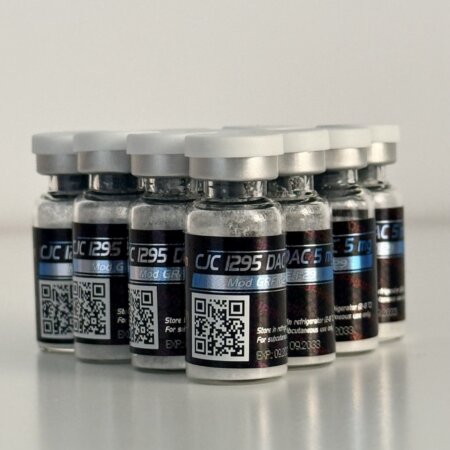
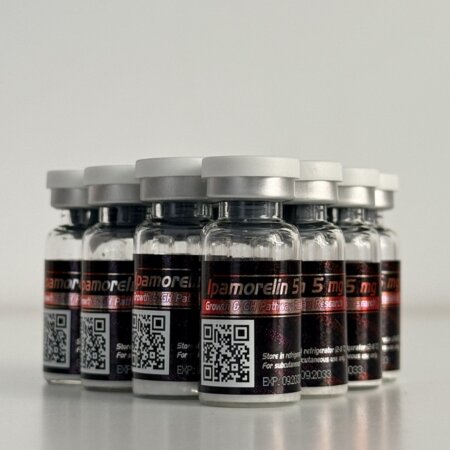
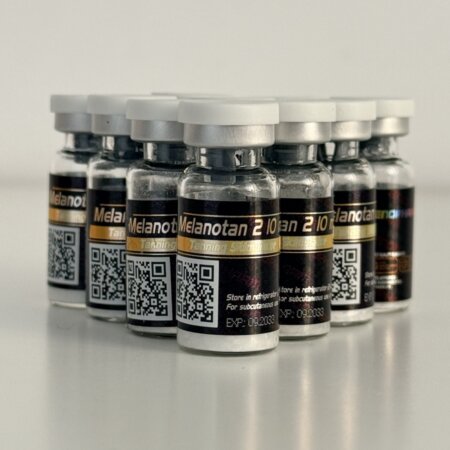
Under this category on the site sit the GH secretagogues (Ipamorelin Genopharm 5 mg, CJC-1295 DAC Genopharm 5 mg), the healing peptides (Peptide BPC-157 5 mg OxyPharma, TB-500 Thymosin Beta 4 Genopharm 5 mg), Thymosin Alpha-1 Genopharm 5 mg, Melanotan 2 Genopharm 10 mg, and the GLP-1-family peptides (Tirzepatide Genopharm 30 mg, Retatrutide Genopharm 20 mg). Multiple brand alternatives are stocked for the popular actives — OxyPharma, Genopharm, PeptideSciences, and others — with different vial sizes and price points.
For the sub-family details, click through to the individual product pages: each one carries the reconstitution table, dose ranges, injection technique and storage specifics for that particular peptide.