
Retatrutide 10 mg. A newer anti-obesity drug aimed at meaningful weight loss alongside broader metabolic support. What is retatrutide 10 mg and how does it work? Retatrutide 10 mg is an anti-obesity compound built around a triple mechanism of action. It activates GLP-1, GIP and glucagon receptors, which together drive: Reduced appetite and a stronger feeling of fullness. Stronger breakdown of fat stores. Better metabolic function and tighter blood sugar control. Thanks to this combined effect, Retatrutide 10 mg supports significant weight reduction and long-term maintenance of results. Benefits of Retatrutide 10 mg from OxyPharma. OxyPharma, an Indian manufacturer, produces the original Retatrutide 10 mg to a reliable quality standard. The drug stands out for several reasons: Pronounced weight loss. Clinical trials confirm its effectiveness, particularly in patients with elevated BMI. Triple action. The simultaneous effect on three receptor types gives it an edge over similar single-pathway drugs. Convenient form. A ready-to-use injection solution keeps application straightforward, whatever the lifestyle. Guaranteed quality. The supplied drug is original with a decent shelf life. How to use Retatrutide 10 mg? A doctor should be consulted before use to work out the optimal dose and rule out contraindications. The drug is administered subcutaneously once per week. Dosing is tailored to goals and body characteristics. Clinical trial results: 1 mg — weight loss of 8.7% 4 mg — reduction of 17.1% 8 mg — reduction of 22.8% 12 mg — reduction of 24.2% Side effects: gastrointestinal upset is the most frequently reported issue — usually mild to moderate, and generally fading over time. ECA fat burners, clenbuterol, T3, Retatrutide OXY-RETA (10 mg) OxyPharma
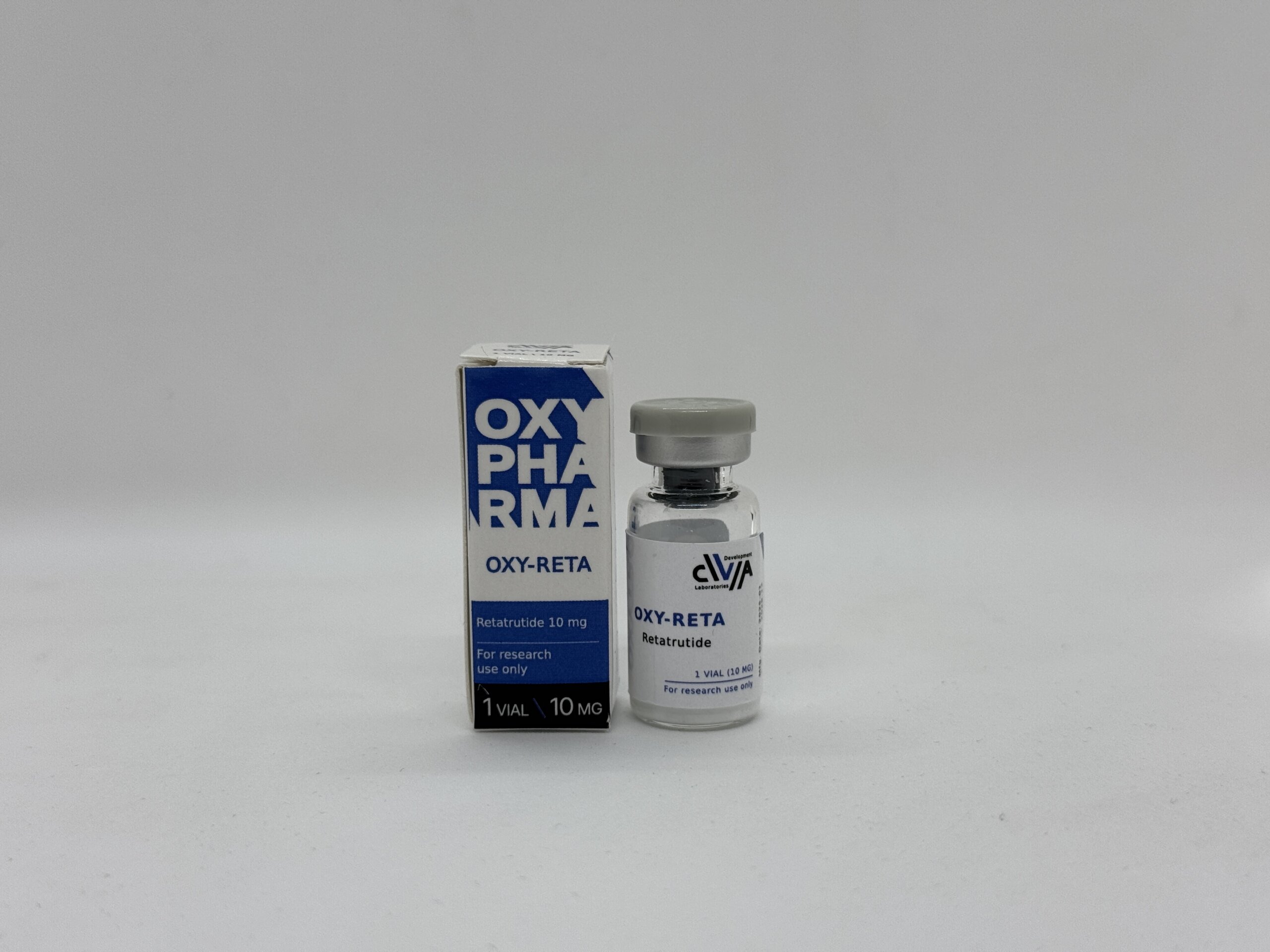
Retatrutide OXY-RETA (10 mg) OxyPharma
€0.00
Retatrutide 10 mg — an anti-obesity peptide built on triple pharmacology
Retatrutide 10 mg is an advanced anti-obesity drug with a unique triple mechanism of action. The molecule activates GLP-1, GIP and glucagon receptors in parallel, with the combined pharmacology aimed at:
reduced appetite and a stronger sense of fullness;
stronger breakdown of fat stores;
better metabolism and tighter control over blood sugar levels.
That three-way action is what allows Retatrutide 10 mg to drive significant weight loss and hold the result over longer stretches.
Retatrutide 10 mg from OxyPharma — characteristics
The product comes from OxyPharma, an Indian manufacturer with a reliable track record on quality and effectiveness. A few points typically drive the choice:
Pronounced weight loss. Clinical trials confirm the effect, particularly in patients with elevated BMI.
Triple action. Hitting three receptor types at once gives it an edge over single-pathway analogues.
Convenient format. The ready-to-inject solution simplifies regular dosing, regardless of lifestyle.
Original stock. Supplied with proper shelf life and manufacturer sealing in place.
How to use Retatrutide 10 mg
Consultation with a doctor comes first — both to settle the optimal dose and to rule out contraindications. Administration is subcutaneous, once a week. The dose is adjusted to the individual, based on goals and body response.
Clinical trial outcomes:
1 mg — weight loss of 8.7%
4 mg — reduction of 17.1%
8 mg — reduction of 22.8%
12 mg — reduction of 24.2%
Side effects: gastrointestinal upsets are the most frequently reported. These tend to be mild to moderate and resolve on their own over time.
ECA fat burners, clenbuterol, T3, Retatrutide OXY-RETA (10 mg) OxyPharma
Out of stock
Retatrutide is a triple agonist — GIP, GLP-1 and glucagon receptors — currently in late-stage clinical trials for obesity and type-2 diabetes. Standard titration begins at 0.5 mg weekly, climbing in 0.5–1 mg steps every four weeks until a tolerable maintenance dose is reached (typical ceiling 8–12 mg). The 10 mg vial covers several weeks at mid-range dosing. Reconstitute with 1–2 ml bacteriostatic water and keep refrigerated throughout the active cycle. Nausea during up-titration is common and generally eases within a fortnight.
| Peptide | Retatrutide (LY3437943) |
| Vial content | 10 mg lyophilised |
| Producer | OxyPharma |
| Receptor profile | GIP / GLP-1 / Glucagon triple agonist |
| Preparation | Reconstitute with bacteriostatic water |
| Weekly titration | 0.5 mg up to 12 mg |
| Route | Subcutaneous injection |
| Storage | Refrigerate at 2–8 °C after reconstitution |
Retatrutide is a triple-agonist peptide acting on GLP-1, GIP and glucagon receptors — the newest arrival in the obesity-pharma class. A 10 mg vial covers several weeks of titration.
Protocols start low: 0.5 mg weekly, nudging upward on a monthly cadence towards 8–12 mg. Appetite suppression and lipolytic signalling together drive fat loss. Intended for adults pursuing substantial weight reduction under medical oversight. Trial data has turned a lot of heads.
Frequently Asked Questions
What makes Retatrutide different from Semaglutide?
Retatrutide is a triple agonist of GIP, GLP-1 and glucagon receptors, studied for weight loss. Doses titrate from 0.5 mg up to around 12 mg weekly.
How often does Retatrutide need to be injected?
Retatrutide is a triple GIP/GLP-1/Glucagon receptor agonist. Weekly injections are titrated upward every few weeks until the weight-loss goal is reached.
What is the typical titration schedule for Retatrutide?
Dosing is weekly and titrated: starts at 0.5 mg weekly, titrated up to 12 mg. Steps up every four weeks.
What happens if a weekly dose of Retatrutide is missed?
If the gap is under four days, inject when remembered; otherwise skip and resume the schedule.
How is Retatrutide different from Semaglutide?
Retatrutide acts on three receptors (GIP, GLP-1 and glucagon), while Semaglutide hits only GLP-1. The broader action is why Retatrutide typically produces stronger weight-loss figures in trials.

Reviews
There are no reviews yet