

What’s behind the molecule
Tirzepatide, catalogued in the development database as LY3437943, is a synthetic peptide of 39 amino acids with an attached C20 fatty-acid diacid chain. That fatty acid enables binding to serum albumin — a trick that extends the half-life to about five days and makes weekly injection viable in the first place.
Pharmacologically Tirzepatide is the first approved dual GIP/GLP-1 receptor agonist. Both receptors belong to the incretin system, which regulates postprandial glucose metabolism and satiety. GIP is released by the K-cells of the duodenum and acts on beta cells, fat cells and the CNS; GLP-1 comes from the L-cells of the ileum, slows gastric emptying and strengthens the satiety signal.
Activity at the GIP receptor matches roughly that of native GIP. At the GLP-1 receptor the activity is lower than for native GLP-1 but still enough for the clinical effects. Tirzepatide is considered a “biased agonist” — it preferentially activates the signalling paths at the GLP-1 receptor that drive insulin secretion and satiety.
How it works in the body
At the cellular level Tirzepatide binds the G-protein-coupled receptors GIPR and GLP-1R. Activation via Gs-signalling raises intracellular cAMP, which produces different endpoints in different tissues:
- Pancreas — stronger insulin release when blood sugar is elevated; at low blood sugar the effect is essentially nil (no hypoglycaemia risk).
- GI tract — clear slowing of gastric emptying, which flattens postprandial blood-sugar spikes and stretches the satiety window.
- CNS — reduced appetite perception and blunted reward response to hyper-caloric food. Users report that “food noise” (the constant thinking about the next meal) practically vanishes.
- Fat tissue — GIP receptors on adipocytes suggest Tirzepatide intervenes directly in fat metabolism. Animal models show a shift from fat storage toward fatty-acid oxidation.
The glucagon receptor is not activated by Tirzepatide — that’s the difference from Retatrutide, the triple agonist. Energy expenditure on Tirzepatide doesn’t rise through glucagon stimulation but exclusively through reduced calorie intake.
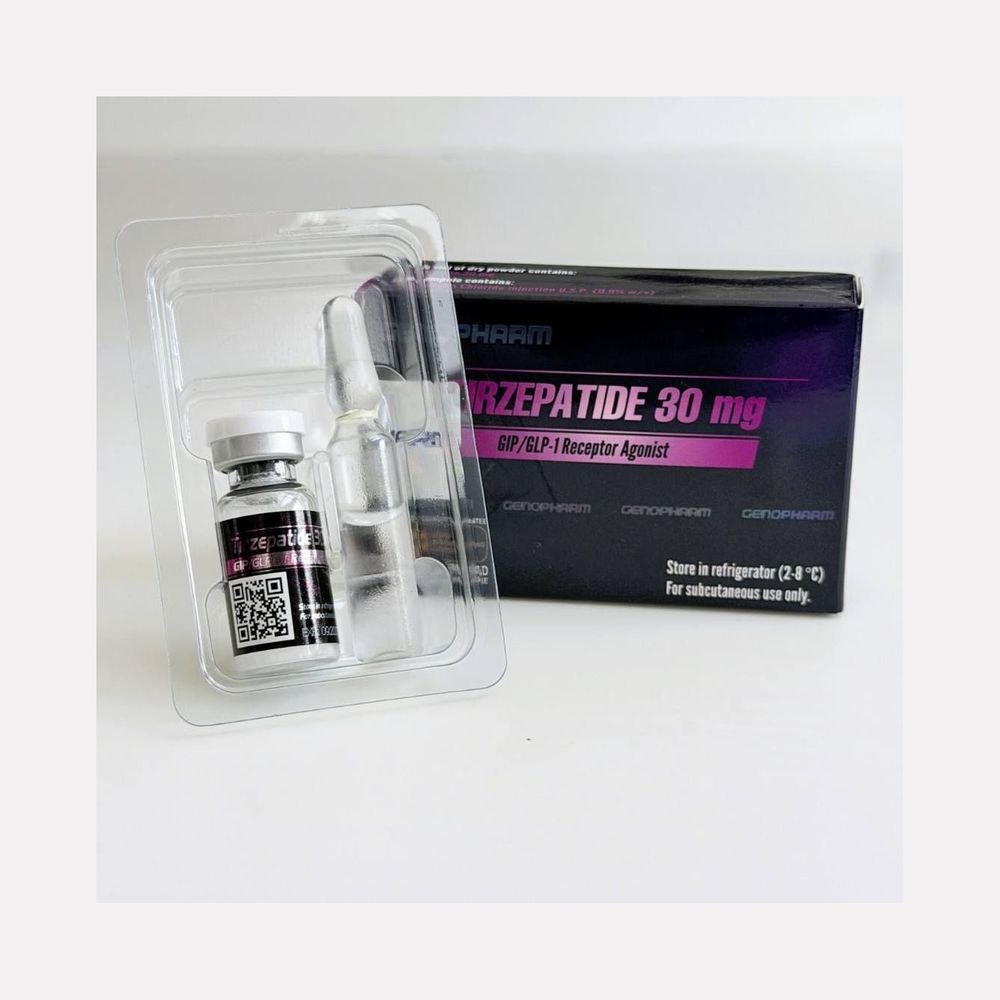
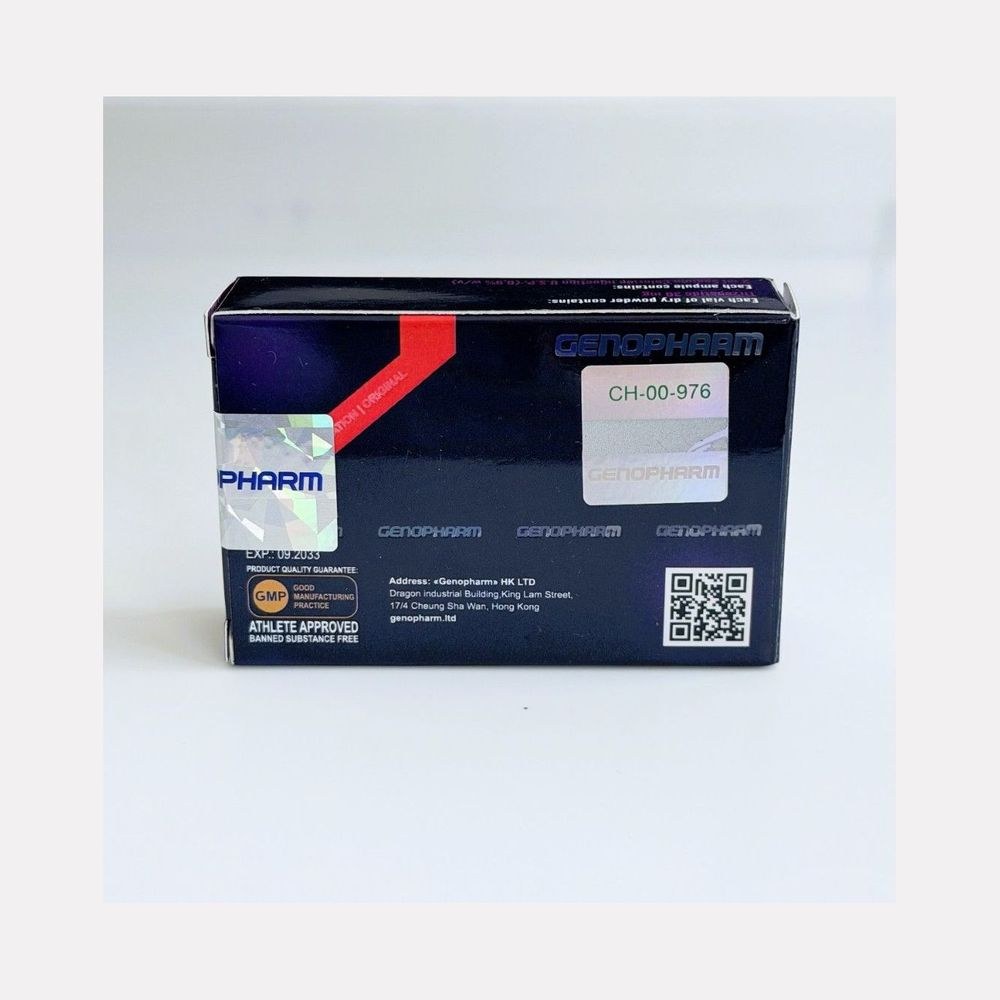
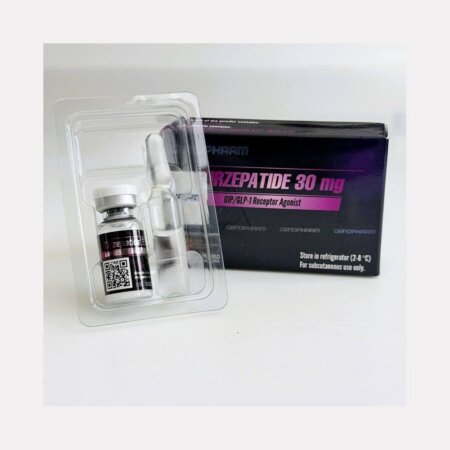
What Genopharm offers in the 30 mg vial
The 30 mg vial is convenient for users planning a longer application window or covering several titration steps in one purchase. At the standard 5–15 mg weekly dose, one 30 mg vial lasts 2 to 6 weeks depending on the target level. For a full titration from 2.5 mg (weeks 1–4) through 5, 7.5, 10 mg (four weeks each) to the 15 mg maintenance, the vial covers the first 6–10 weeks for many users.
Lyophilised, GMP-produced, no additives. Reconstitute with bacteriostatic water before use.
Who this compound is interesting for
Clinically Tirzepatide is approved for type-2 diabetes (as Mounjaro) and obesity (as Zepbound). In strength-sport circles use concentrates on three scenarios:
- Aggressive cutting phases — anyone with 5–8 kg of fat to lose 4–6 weeks out from a competition usually struggles with cravings, training-performance loss and metabolic adaptation. Tirzepatide switches the hunger off almost entirely.
- Recomp at maintenance calories — some users run Tirzepatide year-round at low dose (2.5–5 mg weekly) to trade fat for muscle at near-constant body weight.
- After a bulking phase — the classic cycle: 12–16 weeks of caloric surplus with testosterone, then a deficit with Tirzepatide.
The muscle-loss question
In the clinical SURMOUNT trials, about 25% of the weight lost was lean body mass. On a 20 kg loss that’s around 5 kg of fat-free mass — some of it water, connective tissue and visceral load, but some of it actual skeletal muscle. A secondary analysis quantified the lean-mass loss at 15 mg Tirzepatide over 72 weeks at about 11%.
Those numbers come from studies with overweight and obese people whose baseline muscle mass per kilogram of body weight is much lower than in trained athletes. For a 90 kg bodybuilder at 15% body fat it doesn’t automatically mean the same percentages — but without resistance training and protein intake around 2.2 g/kg fat-free mass, a disproportionately large share of the weight loss will come off muscle.
Safety and WADA
Most common dose-dependent complaints in the SURMOUNT and SURPASS programmes: nausea (23–31%), diarrhoea (13–17%), vomiting (8–12%), constipation (10–14%), dyspepsia, injection-site reactions, occasional hair loss in rebound phases.
Two safety topics deserve special attention: in rat models Tirzepatide produces dose-dependent thyroid C-cell tumours — Zepbound is therefore contraindicated in personal or family history of medullary thyroid carcinoma (MTC) or MEN-2. Second: acute pancreatitis showed up at raised frequency in registration trials — with unexplained upper-abdominal pain radiating to the back, stop immediately and get medical evaluation.
Legal picture: prescription drug in the US (FDA), UK (MHRA), and EU (EMA). Purchase without a prescription is illegal. WADA status 2026: not on the Prohibited List but in the Monitoring Programme — use currently permitted, but WADA is watching usage patterns.
Instructions
Reconstitution
The 30 mg vial is reconstituted with bacteriostatic water. Recommended dilutions for common weekly doses:
- 3 ml water → 10 mg/ml → 0.25 ml = 2.5 mg (starter dose week 1–4)
- 3 ml water → 10 mg/ml → 0.5 ml = 5 mg
- 6 ml water → 5 mg/ml → 1 ml = 5 mg
- 6 ml water → 5 mg/ml → 3 ml = 15 mg (target dose)
Spray water slowly at the inner wall. Roll the vial for 30 seconds between your palms, do not shake. After reconstitution the solution should be clear.
Titration schedule
| Phase | Dose | Duration |
|---|---|---|
| Introduction | 2.5 mg weekly | 4 weeks |
| Titration step 1 | 5 mg weekly | 4 weeks |
| Titration step 2 | 7.5 mg weekly | 4 weeks |
| Titration step 3 | 10 mg weekly | 4 weeks |
| Titration step 4 | 12.5 mg weekly | 4 weeks |
| Maintenance | 15 mg weekly | Continuous |
The long titration exists for a concrete reason: the common GI side effects (nausea, diarrhoea, constipation) come mostly when you step up to a higher dose and settle across about two weeks as the body adapts. Titrate too fast and you risk severe nausea and treatment discontinuation.
With the 30 mg vial and a clean titration, the product covers about 8–12 weeks — good for the full buildup phase plus a few weeks of maintenance.
Injection technique
Subcutaneous injection into the abdominal wall, outer thigh or deltoid. Insulin syringe 30G × 8 mm for doses up to 10 mg (up to 2 ml volume at 5 mg/ml). For larger volumes, 25G–27G × 12–16 mm.
Rotate injection sites weekly. The weekday of injection should stay constant (always on Sundays, say) so the blood level stays even.
Holding on to muscle during the run
If you’re using Tirzepatide for fat loss and want to keep muscle:
- Resistance training 3–5× per week with progressive overload
- Protein around 2.2 g/kg fat-free mass
- Moderate deficit of 300–500 kcal below maintenance — not extreme
- Enough sleep (keep cortisol low)
- Creatine supplementation, to prop up training performance despite reduced intake
Without these basics a disproportionately large share of the loss comes off muscle — true for all GLP-1-based compounds.
Storage
Before reconstitution: fridge at 2–8 °C, kept from light.
After reconstitution: fridge at 2–8 °C, use within 4 weeks. With a 30 mg vial and weekly 5–15 mg doses, the product gets consumed faster than the activity window — a good balance.
Do not freeze. Faster activity decay at room temperature.
When to stop immediately
- Persistent severe nausea or vomiting with dehydration (kidney-failure risk)
- Upper-abdominal pain radiating to the back — pancreatitis suspicion
- Visible lumps in the neck — MTC workup required
- Massive muscle mass loss (strength, circumference)
Stopping after a planned cycle: taper slowly rather than stop abruptly. Rebound effects (cravings, fast weight regain) are documented — a structured calorie plan for 2–3 months after stopping is recommended.




Reviews
There are no reviews yet