
KPV OxyPharma Peptide 10mg — tissue restoration and regeneration KPV is a short synthetic peptide built from three amino acids: Lysine (K), Proline (P) and Valine (V). This tripeptide is a biologically active fragment of alpha-melanocyte-stimulating hormone (α-MSH), and it has drawn interest in the research community for its strong anti-inflammatory and antibacterial activity. Molecular Basis: Role of KPV Components The unique activity of KPV comes from how its three building blocks work together — each one plays a defined part: Lysine (K). An essential amino acid, lysine is actively involved in tissue growth and repair. In the context of KPV, it contributes to the anti-inflammatory effect by modulating the immune response and engaging with key cellular receptors. Proline (P). This non-essential amino acid is structural. Proline stabilises the spatial conformation of the peptide, keeping it stable and correctly oriented so that it can engage its cellular targets properly. Valine (V). A branched-chain amino acid, valine supports energy metabolism and protein synthesis. It helps the peptide cross into the cell and participate in specific cellular signalling pathways. The KPV peptide is designed as a tool for maintaining body homeostasis — primarily through subtle modulation of the immune system and effective relief of inflammatory processes. Key Mechanism of Action: Inflammation Control By modulating the immune system, KPV shows a wide range of benefits: Reduced inflammation — dampens the activity of inflammatory mediators, giving relief in both acute and chronic conditions. Immunomodulation — regulates how the immune system behaves, reducing the risk of autoimmune reactions and keeping balance. Help with skin conditions — useful in psoriasis, eczema and atopic dermatitis, thanks to its ability to calm inflammation and restore the skin barrier. Pain relief — cuts pain tied to inflammation by reducing swelling and tissue irritation. Wound healing — stimulates regeneration and speeds the recovery of skin and soft tissue. Support for autoimmune conditions — may be useful as part of combined therapy for rheumatoid arthritis, inflammatory bowel disease and related disorders. Antimicrobial activity — some studies suggest KPV can inhibit the growth of pathogenic microorganisms. Stronger skin barrier — improves the protective functions of the skin, its hydration and its resistance to external stress. The anti-inflammatory effect also helps in colitis, irritable bowel syndrome and other inflammatory conditions of the gastrointestinal tract. Clinical investigations of the KPV peptide focus on confirming its efficacy and safety. Reported findings show meaningful improvements in inflammatory markers and in overall immunity amongst participants. Research is actively highlighting its potential in dermatology and as an agent that supports wound healing. Application protocol The recommended daily dose is 500 mcg. The injection is given subcutaneously — into the abdomen or the front surface of the thigh. After insertion, hold the needle in place for 10 seconds to ensure full absorption. It is sensible to rotate injection sites. The course usually runs 2 to 4 weeks. In severe systemic inflammation, the dose can be lifted to 1 mg per day. What can KPV be combined with? The KPV peptide works well on its own and alongside other peptides — especially where therapy or recovery calls for a joined-up approach. Several combinations are known to amplify regenerative, anti-inflammatory and restorative effects: BPC-157. One of the best-known regeneration peptides. Paired with KPV, it strengthens the healing of mucous membranes, joints, ligaments and skin. The combination sees regular use for injuries, after surgery, and for inflammation of the gastrointestinal tract (irritable bowel syndrome or ulcerative colitis, for instance). TB-500 (thymosin beta-4). Activates cell migration and speeds recovery from physical damage. In tandem with KPV, it helps the body bounce back faster from training, bruises, sprains and other microtraumas. Particularly relevant for athletes and anyone with an active lifestyle. GHK-Cu is a copper-containing peptide valued for improving skin texture, stimulating collagen production and calming inflammation. With KPV in the mix, it helps with acne, eczema, post-acne marks — and speeds up healing whilst reducing scarring. This is only a small slice of the possible combinations — the full scheme depends on the task at hand. Possible Adverse Reactions and Warnings KPV Peptide is considered safe and well tolerated by most users. It does not trigger the systemic reactions typical of hormonal drugs and does not affect blood sugar, blood pressure or heart rate. However, like any active substance, individual reactions are possible — particularly on prolonged use or in cases of hypersensitivity. What may show up: Local skin reactions. After the injection, a touch of redness may appear at the site. This usually settles within 10–15 minutes and needs no intervention. Gastrointestinal discomfort. May be down to individual response to the peptide. If symptoms persist, dose reduction or a short break is sensible. This product is intended for laboratory and research purposes only. The information presented is based on scientific research and is not intended to guide the diagnosis, treatment or prevention of disease. Results vary from person to person and depend on individual health status. Peptides, OXY-KPV (5 mg) OxyPharma
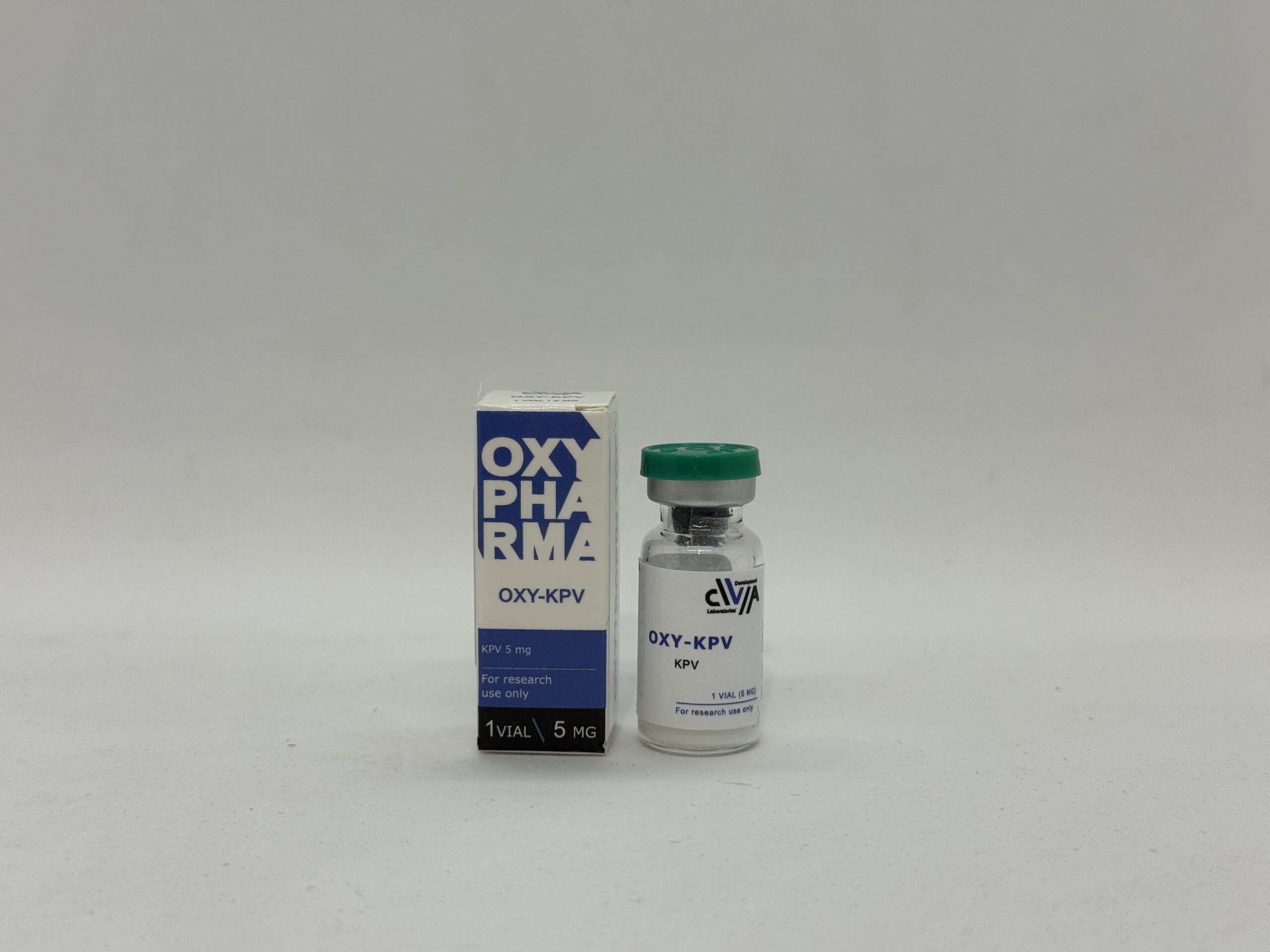
Peptide KPV OXY-KPV (5 mg) OxyPharma
€0.00
KPV OxyPharma Peptide — tissue restoration and regeneration
KPV is a short synthetic peptide built from three amino acids: Lysine (K), Proline (P) and Valine (V). The tripeptide is a biologically active fragment of alpha-melanocyte-stimulating hormone (α-MSH), and the scientific community has gravitated towards it for its anti-inflammatory and antibacterial activity.
Molecular basis — role of KPV components
The activity of KPV comes down to the synergy of its three building blocks, each of which carries a specific function:
Lysine (K). An essential amino acid heavily involved in tissue growth and repair. In the context of KPV, it supports the anti-inflammatory effect by modulating the immune response and engaging key cellular receptors.
Proline (P). A non-essential amino acid with mostly structural significance. It stabilises the spatial conformation of the peptide, keeping its shape correct and the binding to cellular targets effective.
Valine (V). A branched-chain amino acid tied into energy metabolism and protein synthesis. It helps the peptide slip into the cell and participate in specific signalling pathways.
The KPV peptide is designed as a tool for keeping homeostasis in check — mostly through subtle modulation of the immune system and the dampening of inflammatory processes.
Key mechanism of action — inflammation control
Thanks to its ability to modulate immune signalling, KPV shows a range of effects:
Reduced inflammation — lowers the activity of inflammatory mediators, bringing relief in acute and chronic conditions.
Immunomodulation — fine-tunes immune function, lowering the chance of autoimmune flare-ups while keeping balance.
Skin disorders — useful in psoriasis, eczema and atopic dermatitis thanks to the anti-inflammatory effect and the support it offers for barrier recovery.
Pain relief — eases pain tied to inflammation by reducing swelling and tissue irritation.
Wound healing — stimulates regeneration and shortens the repair time for skin and soft tissue.
Autoimmune disease support — potentially helpful within complex therapy for rheumatoid arthritis, inflammatory bowel disease and other conditions.
Antimicrobial activity — some studies suggest KPV can inhibit the growth of pathogenic microorganisms.
Skin barrier reinforcement — supports the protective layer, improves hydration and raises resistance to external factors.
The anti-inflammatory effect carries over to colitis, irritable bowel syndrome and other inflammatory conditions of the gastrointestinal tract. Clinical studies of the KPV peptide focus on confirming effectiveness and safety. Findings so far point to meaningful improvements in inflammatory marker control and in overall immunity among participants. Dermatology and wound healing are the areas drawing the most research attention.
Application protocol
Recommended daily dose: 500 mcg. The injection is subcutaneous — abdominal area or front of the thigh. After insertion, the needle should be held in place for 10 seconds to allow complete absorption. Alternating injection sites is advisable. Course duration runs from 2 to 4 weeks. In cases of severe systemic inflammation, the dose can be pushed to 1 mg per day.
What KPV can be combined with
The peptide works on its own and sits well in combinations with others — especially when the goal of therapy or recovery calls for an integrated approach. A few popular pairings that reinforce regenerative, anti-inflammatory and restorative effects:
BPC-157. One of the better-known peptides for regeneration. Paired with KPV, it strengthens the healing of mucous membranes, joints, ligaments and skin. The combination is often picked for injuries, post-operative recovery and gastrointestinal inflammation (irritable bowel syndrome or ulcerative colitis, for instance).
TB-500 (thymosin beta-4). Activates cell migration and shortens the recovery curve from physical damage. In tandem with KPV, it supports a faster bounce-back after training, bruises, sprains and other microtraumas. Particularly relevant for athletes and anyone keeping an active lifestyle.
GHK-Cu. A copper-containing peptide known for improving skin texture, stimulating collagen synthesis and dampening inflammation. In combination with KPV, it finds use for acne, eczema and post-acne, and also speeds healing while reducing scarring.
Those are only a few of the possible combinations — the schemes are chosen based on the task at hand.
Possible adverse reactions and warnings
KPV is considered safe and well tolerated by most users. It doesn’t trigger the systemic reactions typical of hormonal drugs, and it doesn’t affect blood sugar, blood pressure or heart rate. Still, like any active substance, individual reactions can occur — particularly with prolonged use or hypersensitivity.
What may show up:
Local skin reactions. A slight redness at the injection site after dosing. This typically clears within 10-15 minutes and needs no intervention.
Gastrointestinal discomfort. May relate to individual sensitivity to the peptide. If symptoms linger, the sensible move is to drop the dose or pause the course.
This product is intended for laboratory and research purposes only. The information shown is based on scientific research and is not meant to guide the diagnosis, treatment or prevention of disease. Results vary between individuals and depend on each person’s unique health profile. Peptides, OXY-KPV (5 mg) OxyPharma
Out of stock
KPV is the C-terminal tripeptide of alpha-MSH — Lys-Pro-Val — studied for its anti-inflammatory and gut-healing effects. Reconstitute the 5 mg vial with 2 ml of bacteriostatic water, giving 2.5 mg/ml. Typical sub-cut dosing sits in the 250–500 mcg range daily. Store the lyophilised vial at 2–8 °C before use; once reconstituted, keep refrigerated and use within four weeks. Freeze-thaw cycles degrade peptide integrity, so single-point dosing from a stable vial is the sensible route.
| Peptide | KPV (Lysine-Proline-Valine tripeptide) |
| Content per vial | 5 mg lyophilised powder |
| Manufacturer | OxyPharma |
| Presentation | Freeze-dried vial for reconstitution |
| Reconstitution | Bacteriostatic or sterile water |
| Typical daily dose | 250–500 µg |
| Storage before mixing | Below 25 °C, out of light |
| Storage after mixing | 2–8 °C, use within 30 days |
KPV is a short tripeptide derived from alpha-MSH, prized for its anti-inflammatory profile across gut, skin and joint tissue. The vial here holds 5 mg of lyophilised peptide; bacteriostatic water puts it to work.
Typical use runs 250–500 µg daily, sub-cut. Downregulation of NF-κB signalling and the mast-cell response is the headline mechanism. Suited to those managing chronic irritation — flare-ups, slow-healing wounds, long-standing gut issues — rather than acute injury.
Frequently Asked Questions
What is the KPV peptide used for?
KPV is a short tripeptide (Lys-Pro-Val) studied for its anti-inflammatory effects, mainly on gut and skin tissue. Typical dosing is 250–500 mcg daily.
How is KPV typically administered to users?
KPV is a short peptide with anti-inflammatory activity. It’s often used by people with gut or joint complaints.
How is KPV typically administered day to day?
The usual dosing is 250 to 500 mcg daily, kept up for three to six weeks.
Is KPV safe for long-term use?
Short cycles of a few weeks on, a few off, are the sensible pattern — continuous use isn’t well studied.
What makes KPV different from BPC-157?
KPV is a short tripeptide with anti-inflammatory action across the gut and skin, whilst BPC-157 is better known for tendon and ligament repair.




Reviews
There are no reviews yet