
Semaglutide OXY-SEMA (2 mg) Oxypharma — overview. Semaglutide is an analogue of glucagon-like peptide 1 (GLP-1), 94% identical in sequence to human GLP-1. It acts as a GLP-1 receptor agonist that selectively binds to and activates the GLP-1 receptor. Semaglutide lowers blood glucose in a glucose-dependent way — triggering insulin secretion and tempering glucagon release when blood glucose runs high. The glucose-lowering effect also involves a slight slowing of gastric emptying. During hypoglycaemia, semaglutide reduces insulin secretion and does not interfere with glucagon release. Semaglutide reduces body weight and body-fat mass through a general drop in appetite. Indications for use. • As an adjunct to diet and exercise, to improve glycaemic control in adults with type 2 diabetes mellitus. • To cut the risk of major adverse cardiovascular events in adults with type 2 diabetes mellitus and established cardiovascular disease. Semaglutide 2 mg dosage. The starting dose of semaglutide is 0.25 mg once weekly. After 4 weeks, the dose is lifted to 0.5 mg once a week. After at least 4 weeks at 0.5 mg once weekly, the dose can be moved to 1 mg once weekly for further improvement in glycaemic control. Weekly doses above 1 mg are not recommended. Semaglutide is given once a week at any time of day, with or without food. The injection is placed subcutaneously into the abdomen, thigh or upper arm. The injection site can be changed without altering the dose. Semaglutide should not be given intravenously or intramuscularly. If needed, the day of weekly dosing can be shifted, provided the interval between two doses is at least 3 days (>72 hours). After choosing a new day, the once-weekly rhythm continues from there. Precautions. Diabetic ketoacidosis: semaglutide should not be used in type 1 diabetes mellitus or in the treatment of diabetic ketoacidosis. Pancreatitis: if pancreatitis is suspected, semaglutide should be stopped immediately — and if confirmed, it should not be restarted. Diabetic retinopathy: patients with diabetic retinopathy should be monitored. Use during pregnancy and lactation. Semaglutide should not be used during pregnancy. If a patient plans a pregnancy, semaglutide should be discontinued at least 2 months beforehand. Because a risk to a breastfed infant cannot be ruled out, semaglutide should not be used during breastfeeding. Interactions with other drugs. Semaglutide slows gastric emptying and may affect the rate at which concomitantly taken oral drugs are absorbed. Caution is advised in patients taking oral medicines that require rapid gastrointestinal absorption. Overdose. In clinical studies, cases of overdose of up to 4 mg at a time and up to 4 mg per week have been reported. The most frequently reported adverse reaction was nausea. There is no specific antidote for semaglutide overdose. In the event of overdose, appropriate supportive treatment should be started according to the clinical signs and symptoms. Storage. Store between 2 °C and 8 °C (in the refrigerator). Do not freeze. Keep out of the reach of children. ECA fat burners, clenbuterol, T3, Semaglutide OXY-SEMA (2 mg) Oxypharma
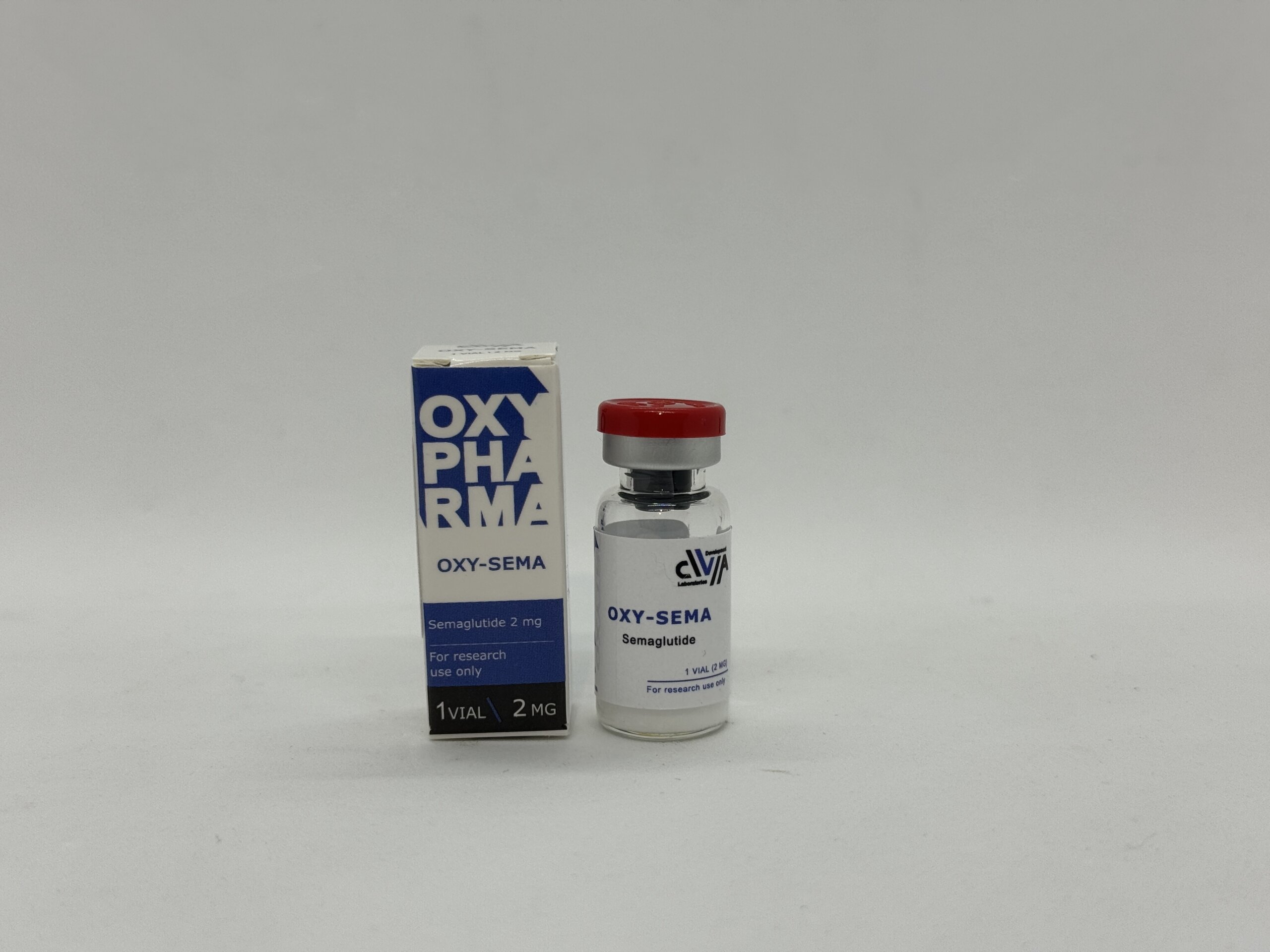
Semaglutide OXY-SEMA (2 mg) OxyPharma
€0.00
Semaglutide OXY-SEMA (2 mg) OxyPharma — product information
Semaglutide is an analogue of glucagon-like peptide 1 (GLP-1), with 94% sequence identity to human GLP-1. It functions as a GLP-1 receptor agonist, binding selectively to the GLP-1 receptor and activating it. Semaglutide lowers blood glucose levels in a glucose-dependent fashion — stimulating insulin secretion and reducing glucagon secretion whenever blood glucose runs high. A slight delay in gastric emptying also contributes to the glucose-lowering mechanism. During hypoglycaemia, semaglutide reduces insulin secretion and does not interfere with glucagon secretion. The drug also brings down body weight and body fat mass through a general reduction in appetite.
Semaglutide 2 mg — indications for use
• Adjunct to diet and exercise to improve glycaemic control in adults with type 2 diabetes mellitus
• Reduction of the risk of major adverse cardiovascular events in adults with type 2 diabetes mellitus and established cardiovascular disease
Semaglutide 2 mg — dosage
The starting dose of semaglutide is 0.25 mg once weekly. After 4 weeks, the dose should be raised to 0.5 mg once a week. After at least 4 weeks on 0.5 mg once weekly, the dose may be increased further to 1 mg once weekly for additional glycaemic control. Weekly doses above 1 mg are not recommended.
Semaglutide is given once a week at any time of day, with or without food. The injection goes subcutaneously into the abdomen, thigh or upper arm. The site can be rotated without any dose adjustment. Semaglutide should not be administered intravenously or intramuscularly. The day of weekly dosing can be shifted if necessary — provided the interval between two doses sits at a minimum of 3 days (>72 hours). Once a new day has been chosen, dosing continues weekly from that point.
Precautions
Diabetic ketoacidosis. Semaglutide should not be used in type 1 diabetes mellitus, nor for treating diabetic ketoacidosis.
Pancreatitis. If pancreatitis is suspected, semaglutide should be stopped immediately. If pancreatitis is confirmed, do not restart.
Diabetic retinopathy. Patients with diabetic retinopathy should be monitored.
Use during pregnancy and lactation
Semaglutide should not be used during pregnancy. If a patient is planning a pregnancy, semaglutide should be stopped at least 2 months before. Risk to a breastfed child cannot be excluded, so semaglutide should not be used during breastfeeding either.
Interaction with other drugs
Semaglutide slows gastric emptying and may affect the rate of absorption of concomitant oral drugs. Caution is advised in patients taking oral medications that require rapid gastrointestinal absorption.
Overdose
Clinical studies have reported cases of overdose up to 4 mg in a single administration and up to 4 mg per week. Nausea was the most common adverse reaction. No specific antidote for semaglutide overdose exists. In the event of overdose, appropriate supportive treatment should be started based on the patient’s clinical signs and symptoms.
Storage
Store at temperatures between 2 C and 8 C (in the refrigerator). Do not freeze. Keep out of reach of children.
ECA fat burners, clenbuterol, T3, Semaglutide OXY-SEMA (2 mg) Oxypharma
Out of stock
Semaglutide acts as a GLP-1 receptor agonist, slowing gastric emptying and dampening appetite signalling. The standard titration — 0.25 mg weekly for the first four weeks, then 0.5 mg, climbing in similar steps toward a 2.4 mg maintenance for weight management — holds reasonably well across most users. The 2 mg vial covers around eight weeks at starter doses. Reconstitute with 1–2 ml bacteriostatic water for easy dosing, and keep refrigerated throughout. Rotate injection sites (abdomen, thigh, upper arm) to reduce localised reactions.
| Active peptide | Semaglutide |
| Content per vial | 2 mg lyophilised |
| Manufacturer | OxyPharma |
| Class | GLP-1 receptor agonist |
| Weekly titration | 0.25 mg climbing to 2.4 mg |
| Route | Subcutaneous |
| Storage | Keep refrigerated at 2–8 °C |
Semaglutide, 2 mg vial — the GLP-1 receptor agonist behind Ozempic and Wegovy. A single-vial starter for anyone beginning a weight-management protocol.
Dosing climbs slowly: 0.25 mg weekly for a month, then up through 0.5, 1.0, 1.7 and eventually 2.4 mg. The peptide blunts hunger signals through central pathways and slows gastric emptying. Progress tends to be gradual but durable — provided calorie discipline follows the pharmacology.
Frequently Asked Questions
What is Semaglutide used for in weight loss?
Semaglutide is a GLP-1 receptor agonist that curbs appetite and slows gastric emptying. Weekly dosing climbs from 0.25 mg up to 2.4 mg over several weeks.
How often does Semaglutide need to be injected?
Appetite usually drops in the first week on Semaglutide, with steady weight loss normally setting in by the end of week two or three.
Can Semaglutide be used alongside strength training?
Dosing is weekly and titrated: starts at 0.25 mg weekly, titrated up to 2.4 mg. Steps up every four weeks.
What happens if a weekly dose of Semaglutide is missed?
If the gap is under four days, inject when remembered; otherwise skip and resume the schedule.
How long does a 2 mg vial of Semaglutide last?
At the 0.25 mg entry dose, a 2 mg vial covers roughly eight weekly injections — enough for the first full titration step.



Reviews
There are no reviews yet